Windmere Assembly
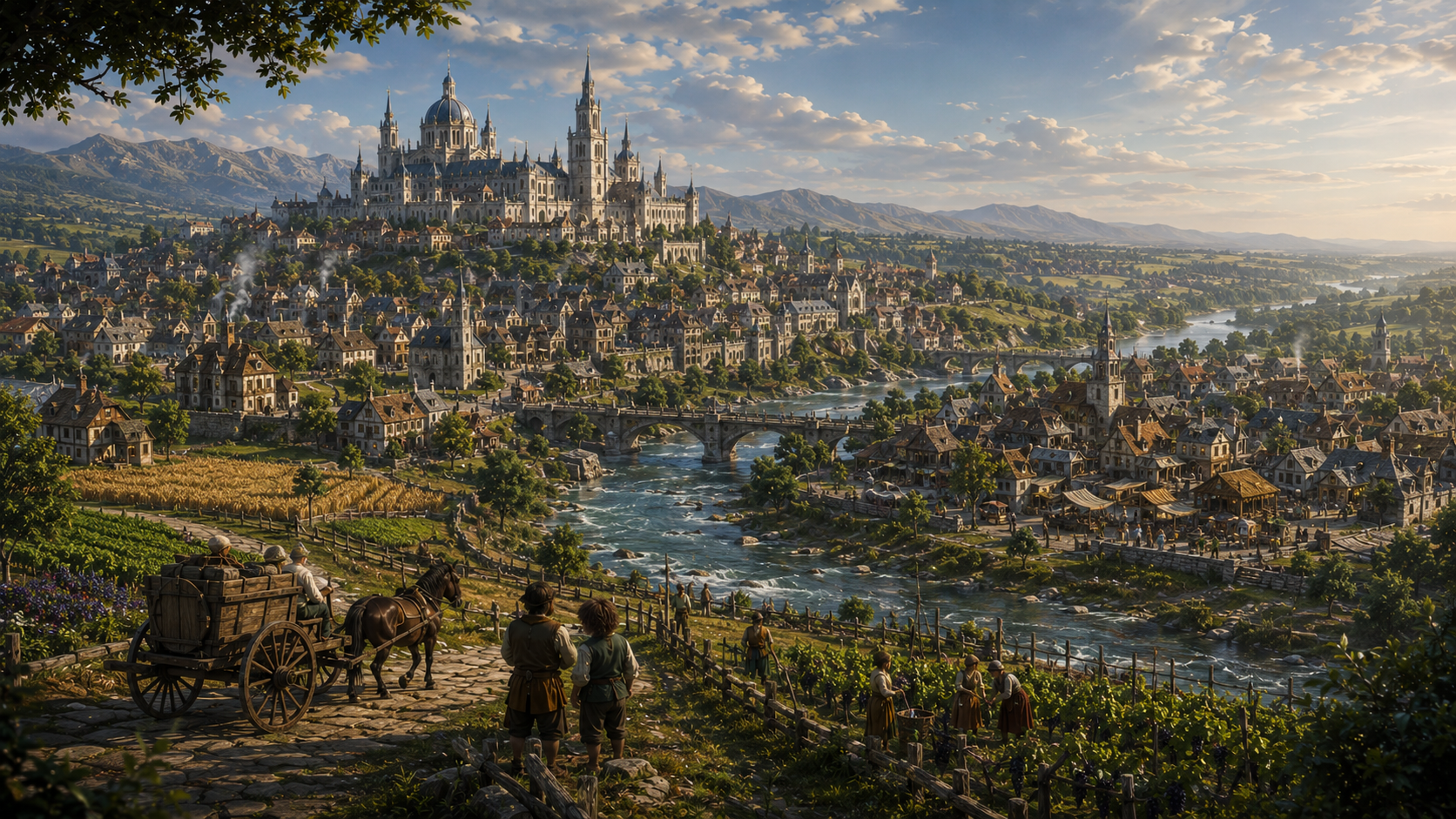
The Windmere Assembly is a wealthy, multi-racial state on the eastern cape of Arkhaven, built from human, dwarven, gnomish, halfling, and elven settlements.
It is a fertile coastal assembly-state where rich grasslands, southern forests, mountain-fed rivers, and sea access have created one of the more prosperous societies on the continent.
The Assembly is defined by shared government, productive land, racial cooperation, and commercial wealth.
Its people are richer than most northern populations because the soil is better, the climate is kinder, and landowners with good farmland hold significant economic power.
Government
The Windmere Assembly is governed by an elected representative body known as the Grand Assembly of Windmere.
Each major people of the state sends officials to the Assembly.
Humans, dwarves, gnomes, halflings, and elves all hold recognised political representation.
Officials are elected from towns, farming districts, forest settlements, mountain communities, trade ports, and guild boroughs.
The purpose of the Assembly is to represent the strongest qualities of each people:
- Humans provide civic administration, agriculture, law, and expansion planning
- Dwarves provide engineering, mining knowledge, fortification, and legal precision
- Gnomes provide invention, scholarship, banking, and magical craft
- Halflings provide agriculture, food supply, local mediation, and community organisation
- Elves provide forest stewardship, long-term planning, diplomacy, and higher magical guidance
The head of government is the Presiding Voice of Windmere, elected by the Assembly from among its senior officials.
The Presiding Voice directs debate, signs laws, oversees diplomacy, and represents the state in formal negotiations.
Windmere government is structured, wealthy, and debate-heavy.
Laws are passed through negotiation between racial blocs, landholding interests, guilds, ports, and rural districts.
Dominant Peoples
The Windmere Assembly is home to humans, dwarves, gnomes, halflings, and elves.
Humans form the largest population and dominate many farming towns, coastal settlements, civic offices, and trade routes.
Dwarves live mainly near the mountain edges, fortified towns, stoneworks, foundries, and road-building districts connected to The Anvilspine Range and Barak Thuldren.
Gnomes are concentrated in workshop towns, universities, counting houses, magical craft guilds, clockwork halls, and port districts.
Halflings are common in the richest farming areas, orchard settlements, river villages, vineyard lands, and food markets.
Elves live mainly in the southern forests, older groves, river estates, magical enclaves, and diplomatic districts.
Their presence gives the Assembly strong influence in forestry, land management, and magical education.
Region and Biome
The Windmere Assembly sits in the Windmere Basin, on the eastern side of Arkhaven, near the cape and the eastern coast.
It has access to the sea and to the waters of the Godscar, giving it strong maritime, river, and coastal trade potential.
The state lies south of both Khuldovar and the Dornhal Empire, where the mountain systems descend and meet around the middle of the Windmere Basin.
Rivers from the Anvilspine Range and Barak Thuldren flow down into Windmere, enriching the basin, feeding its farmland, and linking the Assembly to the dwarven highlands without placing it between the two dwarven states.
The land is greener, warmer, and more fertile than much of the north.
It consists of lush grassy plains, productive farmland, broad river valleys, orchards, vineyards, low hills, and increasingly dense forest in the south.
The southern forests are cooler, older, and more elven-influenced.
The central basin is dominated by farms, market towns, roads, and estates.
The coastal cape contains ports, fisheries, shipyards, lighthouse towns, and fortified sea walls.
Culture
Windmere culture is prosperous, civic-minded, multi-racial, and land-conscious.
The people value cooperation, property, trade, local identity, education, good food, and public debate.
The Assembly has a strong culture of compromise.
Humans, dwarves, gnomes, halflings, and elves live under one political structure, and each people maintains its own customs while contributing to the wider state.
The wealth of the land shapes social life.
Good farmland brings status, and families with fertile estates hold major influence.
Landowners, millers, vintners, brewers, livestock holders, orchard masters, and river merchants carry significant power in rural politics.
Windmere towns are cleaner, richer, and better supplied than settlements in harsher regions.
Public granaries, stone roads, assembly halls, guildhouses, schools, bathhouses, gardens, mills, bridges, and river docks are common signs of civic investment.
The state is known for harvest fairs, river markets, mixed-race civic festivals, public feasts, orchard rites, trade congresses, and formal debate days.
Unlike more militarised or survival-focused states, Windmere’s identity is based on abundance and the management of abundance.
Religion and Magic
Religion in Windmere is diverse.
Humans worship gods of harvest, law, craft, trade, family, safe travel, and sea passage.
Dwarves honour gods of stone, forge, oath, and clan.
Gnomes favour gods of invention, knowledge, luck, and clever craft.
Halflings worship hearth, harvest, food, protection, and community deities.
Elves honour the Seldarine, forest spirits, ancestral groves, and powers of nature and magic.
Magic is present at a moderate to high level, depending on region and people.
Elven communities use magic for forest stewardship, healing, wards, and long-term land protection.
Gnomish settlements use magic for invention, construction, alchemy, clockwork, and civic convenience.
Dwarven rune-workers apply magic to roads, bridges, locks, waterworks, and defensive architecture.
Human and halfling communities use magic mainly for agriculture, healing, weather signs, food preservation, and trade.
Magic in Windmere is regulated by local charters and Assembly law.
Spellcasters are expected to register work that affects land, waterways, public roads, large buildings, or trade infrastructure.
Tensions
The main internal tension is wealth inequality.
The land is richer than the north, and families with fertile estates control more money, food, and influence than poorer citizens, port workers, mountain-edge communities, and landless labourers.
The second tension is representation.
Each people has a recognised place in the Assembly, but disputes arise over voting weight, district borders, guild influence, and whether population, wealth, or racial balance should matter most.
The third tension is land use.
Humans and halflings push for more farming, dwarves push for roads and stoneworks, gnomes push for workshops and experimental districts, and elves push to preserve southern forests and old groves.
These disputes are handled through law, but they remain constant.
🡐 States of Arkhaven