The Throne of Khuldovar
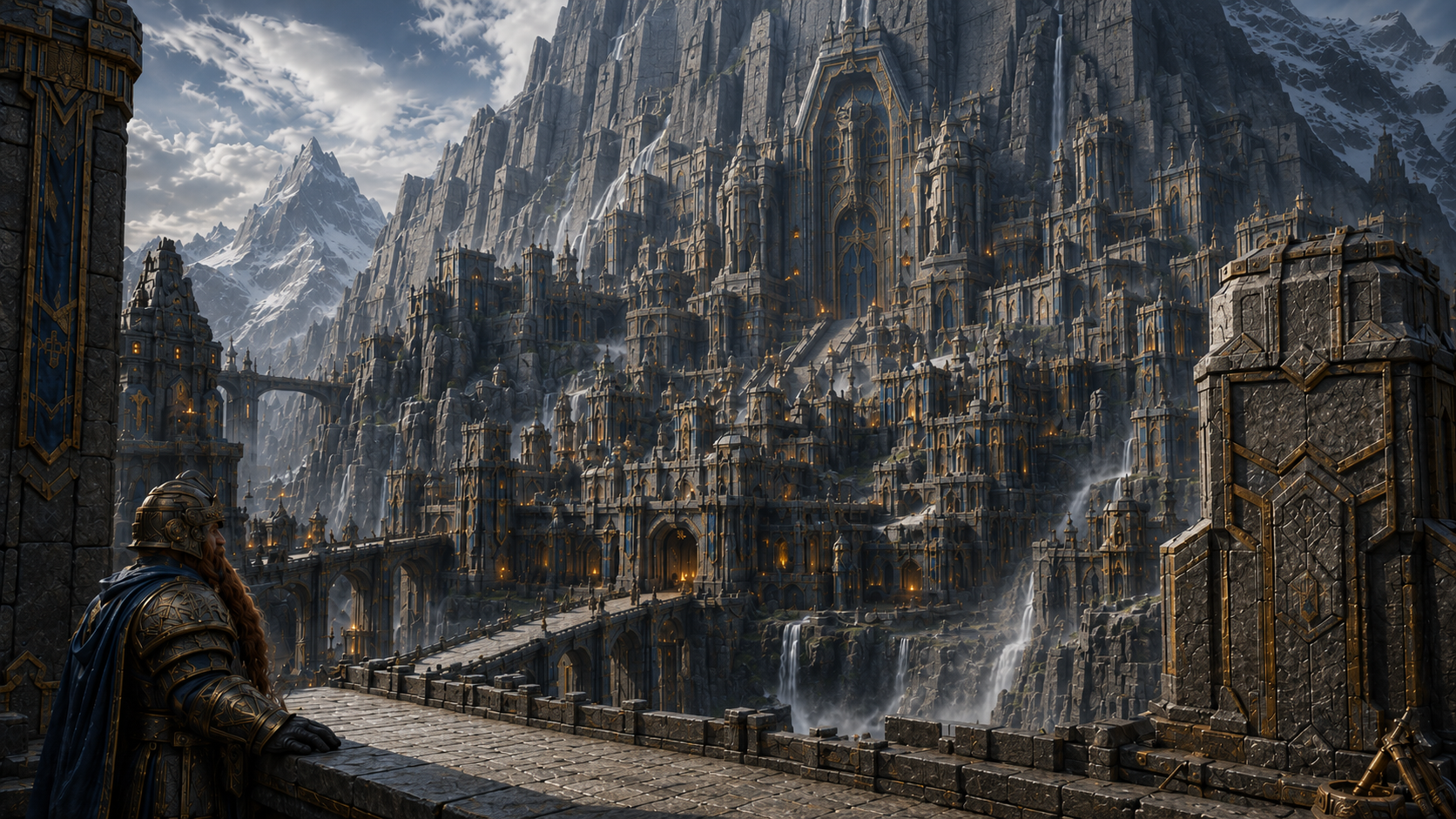
Khuldovar is a dwarven mountain kingdom built within The Anvilspine Range, known to dwarves as Khar Dûmvar, meaning "The Crowned Stone" or "The King-Stone Range".
It is a state of stone halls, royal mines, fortified passes, ancestral law, and long-standing dwarven authority over the mountains that reach toward the Windmere Basin.
Khuldovar is one of the major dwarven powers of Arkhaven.
Its identity is built around kingship, mining, craft, mountain defence, and control of the roads, tunnels, and rivers that descend from the highlands.
Government
Khuldovar is ruled by King Barund Khargrim Anvilthane.
His full formal title is King Barund Khargrim Anvilthane, Stone-Crowned Lord of Khuldovar, Keeper of Khar Dûmvar, High Thane of the Anvilspine.
In common use, he is known as King Barund Anvilthane.
In dwarven court use, he is known as Barund Khargrim, Keeper of the Crowned Stone.
King Barund rules through a traditional dwarven monarchy supported by thanes, clan elders, guildmasters, military captains, mine-lords, and ancestral lawkeepers.
Royal authority is strongest in the main mountain holds, fortress cities, mine complexes, and major trade roads.
The king’s rule is based on bloodline, oath, control of the mountain holds, and recognition by the great clans.
His court governs mining rights, tunnel law, trade agreements, military defence, inheritance disputes, and the protection of sacred ancestral sites.
Dominant Peoples
The dominant people of Khuldovar are dwarves.
The kingdom is home to miners, smiths, masons, tunnel-fighters, engineers, gemcutters, brewers, rune-carvers, merchants, and clan warriors.
Dwarven society is organised around clans, professions, guilds, holds, and family oaths.
Craft skill carries high status, especially in mining, weapon-forging, armour-making, masonry, engineering, and stone architecture.
Khuldovar also contains small communities of humans, gnomes, and halflings in trade districts and surface settlements.
These communities exist under dwarven law and are protected by royal charter.
Region and Biome
Khuldovar lies within The Anvilspine Range, the great mountain chain that runs through the dwarven realm and reaches toward the Windmere Basin.
On common maps, trade records, and human documents, the range is called The Anvilspine Range.
In dwarven ceremony, royal claims, ancestral records, clan oaths, and old inscriptions, it is called Khar Dûmvar.
The land consists of high mountains, deep valleys, cold passes, underground rivers, fortified roads, stone bridges, pine-covered slopes, mining towns, and vast subterranean halls.
Rivers flow down from the mountains and help feed neighbouring lowlands, including lands connected to Republic of Havenor and the Windmere Basin.
Khuldovar’s settlements exist both above and below ground.
Surface towns guard trade roads, mountain gates, and river routes.
The deeper holds contain royal halls, foundries, mines, vaults, clan districts, and ancestral tombs.
Culture
Khuldovari culture is traditional, disciplined, and clan-based.
Its people value oathkeeping, craft excellence, endurance, lawful inheritance, military service, and respect for ancestors.
Dwarves of Khuldovar measure honour through useful work and fulfilled duty.
A well-made bridge, a cleanly cut gem, a defended pass, a paid debt, and a kept oath all carry social weight.
Empty boasting is looked down on unless it is backed by craft, service, or proven courage.
Feasting, brewing, stone-carving, metalwork, clan histories, and formal oath ceremonies are central to public life.
Major agreements are carved into stone or sealed with metal tablets.
Spoken promises matter, but written and carved records carry greater legal force.
The kingdom sees Khar Dûmvar as more than a mountain range.
It is the foundation of dwarven identity, royal legitimacy, and ancestral memory.
Religion and Magic
Khuldovar worships dwarven gods of stone, craft, law, protection, war, fire, family, and the forge.
Ancestor veneration is also important.
Clan tombs, royal crypts, forge-shrines, and oath-stones are treated as sacred places.
Priests serve as spiritual leaders, recordkeepers, oath witnesses, and guardians of burial law.
Religious practice is closely tied to craft and ancestry rather than missionary expansion.
Magic exists but is controlled and practical.
Khuldovari magic is used in rune-work, warding, metallurgy, tunnel reinforcement, forgecraft, stone-shaping, healing, and the protection of vaults.
Rune-carvers and forge-priests hold respected positions, especially when their work strengthens gates, weapons, armour, bridges, and ancestral halls.
Tensions
Khuldovar’s main internal tension is between royal authority and clan privilege.
The king rules the kingdom, but the old clans control mines, guilds, fortresses, and ancestral claims.
Strong kings maintain unity by balancing royal law with clan rights.
The second major tension is resource competition.
Rich veins, old tunnels, collapsed mines, and newly discovered deposits create disputes between clans, guilds, temples, and the crown.
The third tension is the defence of mountain routes.
The Anvilspine Range contains roads and passes that connect several regions.
Control of these routes brings wealth, but it also attracts smugglers, raiders, spies, and foreign pressure.
The fourth tension is preservation.
Khuldovar expands its mines carefully because reckless digging damages old halls, sacred tombs, underground rivers, and sealed places beneath Khar Dûmvar.
🡐 States of Arkhaven