Republic of Havenor
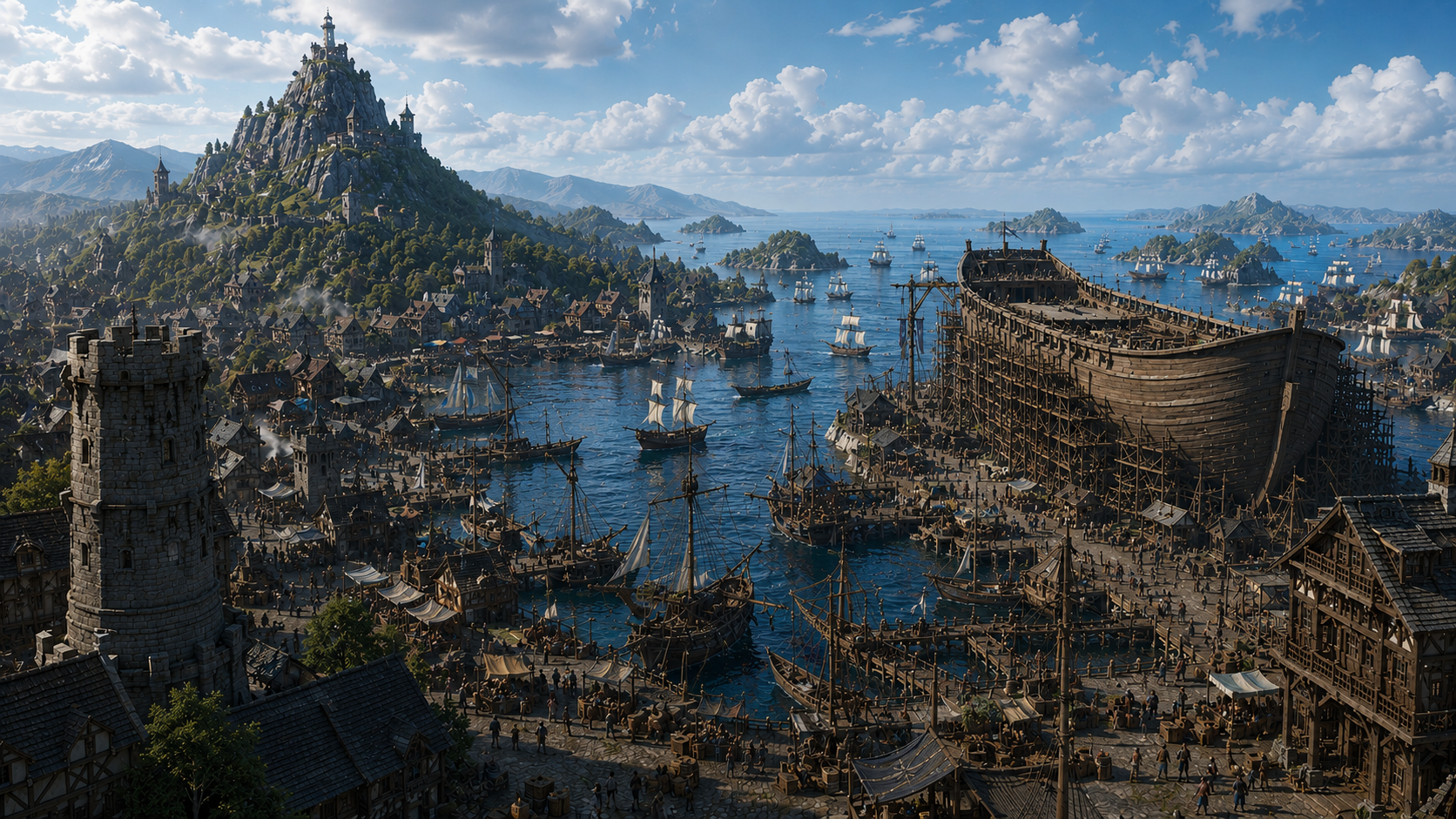
The Republic of Havenor is the oldest human-founded state on Arkhaven and the original landing place of the Ark.
It is a coastal republic of sailors, settlers, craftspeople, soldiers, farmers, clerics, mages, and a few Aasimar-descended families whose culture is shaped by survival, maritime trade, and the memory of first arrival.
Havenor is friendly by reputation, but life there is tougher and more competitive than in the richer inland human states.
Its people never pushed as far into the continent as the settlers who later conquered The Vermillion Crown, and its poorer soil forced Havenor to rely heavily on fishing, trade, shipwork, lake settlements, and hard practical labour.
Government
Havenor is ruled by the Harbour Republic, a civic system built around elected councils, guild representation, and settlement charters.
The highest governing body is the Mariner’s Senate, based in the capital city near the Ark.
It is made up of elected representatives from coastal towns, lake settlements, military districts, temple houses, trade guilds, farming communes, and old Ark-descended families.
The head of state is the First Speaker of Havenor, elected by the Senate for a fixed term.
The First Speaker manages diplomacy, defence, trade policy, and relations with The Throne of Khuldovar, the Dornhal Empire, and neighbouring peoples.
The republic also maintains a Council of Founding Professions, an old institution descended from the Ark’s original skilled passengers.
Seats are reserved for representatives of sailors, farmers, smiths, healers, mages, soldiers, builders, clerics, and fishers.
This council does not rule directly, but it advises the Senate and protects the rights of working citizens.
Havenor’s politics are practical, public, and often argumentative.
Status comes from service, trade success, military record, family reputation, and contribution to the republic.
Dominant Peoples
The dominant people are humans descended from the first landing on Arkhaven.
Many families trace their ancestry to the original passengers of the Ark, especially the 500 settlers chosen to begin families and establish a permanent future on the continent.
The original Ark population included skilled workers, clerics, priests, mages, soldiers, farmers, blacksmiths, carpenters, shipwrights, herbalists, masons, hunters, cooks, scribes, and other essential professions.
Aasimar were among the original arrivals, and several respected Havenori bloodlines still claim celestial ancestry from those first families.
Havenor also contains dwarven residents, half-elves, halflings, gnomes, sailors from other lands, and small communities of foreign merchants.
Dwarves from Khuldovar and Dornhal are especially common in trade towns, workshops, mountain roads, and metal markets.
Region and Biome
Havenor sits on the coast around the bay where humans first landed.
The bay is wide, island-studded, and historically central to the republic’s identity.
Coastal towns are built from timber, raised platforms, sea-facing balconies, watchtowers, and steep-roofed halls overlooking the water.
To the south, Havenor controls inland land around a large freshwater lake fed by rivers flowing down from the mountains of Khuldovar.
This lake provides drinking water, fish, transport, irrigation, and a safer inland settlement zone away from the pirate-held islands of the bay.
Nearer the coast stands a lone mountain that serves as a landmark for sailors and inland travellers.
Its slopes contain signal towers, shrines to the first landing, goat farms, and old lookout posts.
The land is habitable but not especially fertile.
Its soil is poorer than the rich lands of the Veridian March and Windmere Basin regions.
Farming exists, but Havenor cannot rely on grain wealth alone.
The republic survives through fishing, timberwork, shipbuilding, lake trade, metal imports, coastal commerce, and skilled labour.
The Ark
The Ark remains in Havenor and is the most important historic site in the republic.
It is a colossal sea-vessel that carried more than 1,000 people to Arkhaven, including 500 settlers chosen and prepared to start families on the new continent.
The Ark is no longer used as a ship.
It rests in a protected harbour-dock known as Founding Quay, where it has been reinforced, preserved, and partially converted into a civic shrine, museum, archive, and meeting hall.
The Ark contains:
- The First Manifest, listing the original passengers
- The Hall of Professions, honouring the workers who founded Havenor
- The Chapel of Safe Arrival, maintained by clerics and priests, some of whom worship Umberlee although their practice does not follow the usual nature of that god
- The Keel Archive, preserving early maps, laws, and settlement records
- The Oath Deck, where new senators, officers, and First Speakers swear public service oaths
Every citizen of Havenor is taught the story of the Ark.
To damage it is treason, sacrilege, and an attack on human memory.
Culture
Havenori culture is maritime, practical, civic-minded, and survival-focused.
Its people are known for friendliness, direct speech, hard bargaining, and strong local pride.
Hospitality is important, but so is self-reliance.
A guest is fed, a neighbour is helped, and a fool is not protected from consequences forever.
The republic values skilled work.
Shipwrights, sailors, blacksmiths, fishers, farmers, clerics, healers, builders, and militia veterans are respected because Havenor’s foundation depended on useful hands rather than noble blood.
Public festivals are tied to the sea, the Ark, and the founding families.
The most important civic holiday is Landfall Day, when the republic honours the arrival of the Ark, reads names from the First Manifest, lights harbour lanterns, and launches small wooden boats into the bay.
Havenori towns are lively and rougher than the polished cities of older states.
Taverns, docks, fish markets, timber yards, ropewalks, shrine-houses, and guildhalls dominate public life.
Arguments are common, but so are public votes, labour contracts, oath ceremonies, and town musters.
Religion and Magic
Havenor worships many gods.
Sea gods, harvest gods, craft gods, guardian deities, gods of safe travel, gods of healing, and gods of family life all have temples in the republic.
Clerics and priests hold respected positions because they were part of the original Ark settlement and helped keep the first humans alive after landfall.
Aasimar families are treated with cultural respect, though they do not rule the republic by divine right.
Magic exists at a moderate level.
Havenor has mages, ship-enchanters, healers, weather-readers, wardens, and practical spellcasters, but it does not rival the Leridian Concord, the Vermillion Crown, or the major elven states.
Magic is used for navigation, healing, ship repair, weather warnings, preserving food, lighthouse signals, and protecting the Ark.
Pirates of the Bay
The islands in the middle of Havenor Bay are occupied by pirates.
These pirates control hidden coves, old watch posts, smuggling beaches, ruined shrines, and fortified island camps.
The pirate presence has three major effects on Havenor.
First, it makes sea trade more dangerous and expensive.
Second, it forces Havenor to maintain constant patrols despite limited resources.
Third, it creates a black-market economy of stolen goods, ransom deals, illegal salvage, and corrupt harbour contacts.
The pirates are not a single united kingdom.
They are divided into crews, captains, island gangs, smugglers, and private raider bands.
Some are former sailors, debtors, exiles, deserters, foreign criminals, and Havenori citizens who turned to piracy after losing land or trade rights.
The republic officially treats all pirate captains as enemies of the state.
Tensions
The main internal tension is economic pressure.
Havenor’s land is less fertile than the Veridian March and Windmere Basin, so competition over farms, lake access, fishing rights, and trade contracts is intense.
The second major tension is piracy.
The republic controls the coast, but the pirates control many of the bay islands.
This creates constant danger for merchants, fishers, and coastal settlements.
The third tension is political rivalry between old Ark-descended families and newer guild powers.
Founding families carry prestige, but shipwrights, merchants, military officers, and lake-town councils now hold real economic power.
The fourth tension is Havenor’s limited inland expansion.
The republic has not spread as deeply into the continent as other human powers.
This keeps it safer from some land wars, but it also limits agricultural growth, population expansion, and strategic depth.
🡐 States of Arkhaven